
Last updated: October 10, 2026
Key Takeaways
- Focus on the few checks that protect truth, clarity, and usefulness.
- Run the checks in a fixed order to catch costly errors early.
- Match the page to search intent and cover the needed subtopics.
- “Make it sound human” is poor advice for risky or high-stakes content.
AI can draft fast, but it still misses facts, tone, logic, and trust signals that make a piece publishable. Treat the model’s draft as rough stone, then shape it with a 15-point checklist so the final version is accurate, useful, and safe to publish; where the topic demands it, bring in a qualified professional. In practice, that is the heart of the Human editing checklist: 15 checks to fix AI-generated content before publication, and judgment comes first, not polish.
What actually needs fixing before you publish AI content?
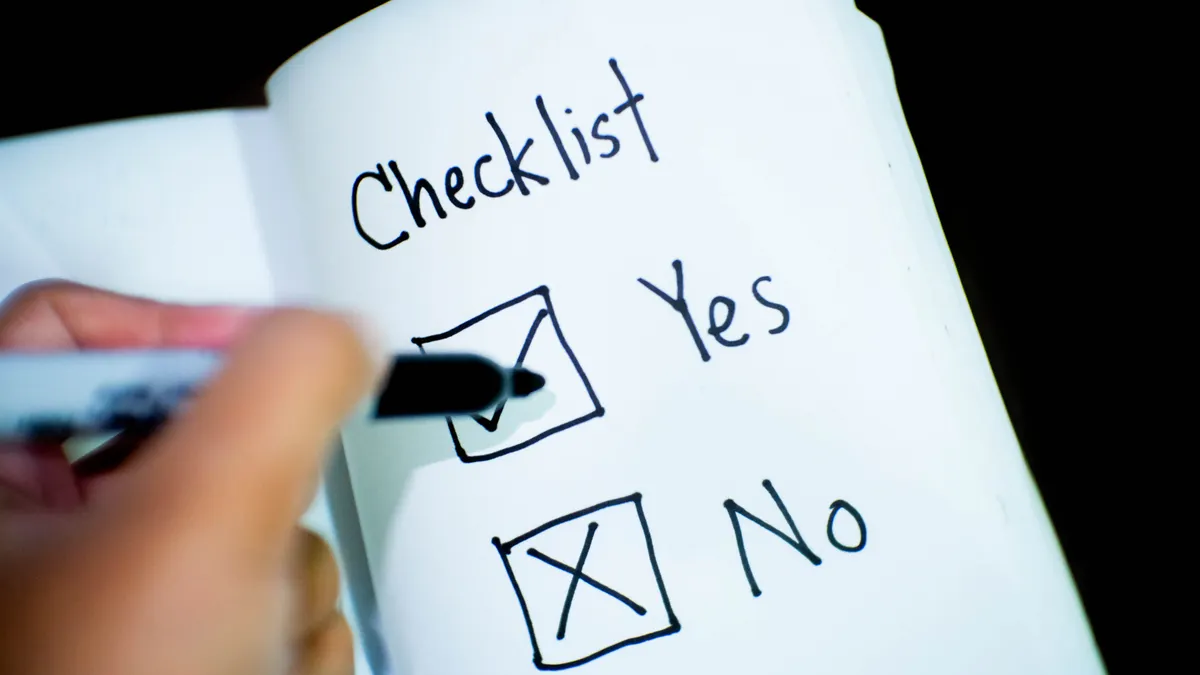
Usually, the problem is not “everything.” It is the pieces that affect truth, clarity, and usefulness. For a blog post, landing page, email, or knowledge base piece, I would start by asking whether it says the right thing, says it plainly, and avoids overclaiming. A neat paragraph that is off by one fact can still do damage.
A practical way to think about the work is this: AI content tends to stumble in predictable spots, so human editing should follow a fixed order. I would begin with claims, move to structure, then tone, then SEO, then compliance. Reverse that order and you can spend 20 minutes making a sentence prettier only to cut it later because it was wrong.
| Situation | Best Path | Why Other Options Fail |
|---|---|---|
| Draft is mostly sound but generic | Tighten angle, add examples, remove filler | Rewriting from scratch wastes time |
| Draft includes facts, prices, or dates | Verify every claim line by line | Style editing cannot fix a false statement |
| Draft feels “AI-ish” but accurate | Humanize voice after factual cleanup | Voice edits before fact checks can hide errors |
| Draft will be published in a regulated field | Use stricter review and source checks | “Close enough” can create legal or professional risk |
A clean process matters because AI tends to sound confident even when it is vague. That is exactly why the human editor’s job is judgment first, not cosmetic work. Quick check: when deciding whether to publish, the real question is not “does this read well?” but “would I stand behind every sentence?”
The 15 checks I would run, in order
Run these checks in a fixed sequence so the expensive mistakes show up early. Edit at random, and the important things slip through.
- Check the main claim. Ask whether the piece answers the target question directly or wanders into side points.
- Verify facts, names, and numbers. Confirm product names, standards, dates, laws, and measurements against reliable sources.
- Remove unsupported certainty. Replace “best,” “guaranteed,” and “always” with language you can defend.
- Check the audience match. Make sure the level of detail fits a beginner, buyer, practitioner, or executive.
- Fix the opening. The first 2–3 sentences should say what the reader will get, not announce that the topic is important.
- Cut repetition. If the same idea appears twice, keep the stronger version and delete the other.
- Stress-test the logic. Look for leaps, missing steps, and conclusions that do not follow from the evidence.
- Check headings. Each H2 should promise something distinct, not a reworded version of the last section.
- Audit examples. Replace vague examples with concrete ones that actually teach something.
- Check tone for overconfidence. AI often sounds more certain than the evidence allows.
- Trim fluff phrases. Remove filler such as “in today’s world” and “it’s important to note.”
- Test the call to action. Make sure the reader knows what to do next if the piece is meant to persuade.
- Check for policy or legal risk. Watch for claims in health, finance, employment, privacy, or safety content.
- Review SEO without stuffing. Put the subject phrase where it helps the reader, not where it distorts the sentence.
- Proofread for mechanical errors. Fix grammar, punctuation, capitalization, and broken formatting last.
For a practical workflow, I would edit in three passes: first for truth, second for structure, third for language. When the content is long, use tools like Google Docs suggestions, Grammarly, Hemingway Editor, or your CMS preview, but do not let any of them make publishing decisions for you. A machine can flag a sentence; it cannot tell you whether the sentence deserves to exist. For general editorial standards, Google Search Central and the AP Stylebook are useful references, and the FTC’s guidance on advertising claims is worth checking when wording gets promotional.
If your AI draft is for SEO, what should you check first?
Search intent and topical completeness come first, not keyword density. For a draft meant to rank, I would ask whether it gives the reader the thing they were searching for in under a minute and whether the page contains the sub-answers that searchers usually need next.
SEO editing goes wrong when people chase surface signals and miss the actual question. A page can include the keyword 12 times and still fail if it never answers the reader’s real problem. That is why I would check the title, H2s, and intro against the query language. When the user asks “how to edit AI-generated content,” the page should not burn 300 words on the history of generative models.
A simple editorial sequence helps:
- Match the title to the search intent with plain language.
- Put the subject in the opening paragraph naturally, not awkwardly.
- Make sure one H2 contains the subject phrase in a readable form.
- Add the missing subtopics: fact-checking, tone, originality, and risk.
- Remove sections that duplicate each other just to chase word count.
- Check internal flow so each section earns the next one.
- Use one or two authoritative external sources where the topic needs grounding, such as Google Search Central or the APA Style guidance page.
I would also check for “helpfulness gaps.” Those are places where a reader would naturally ask, “Okay, but what do I do if my draft is for medical content, or a product page, or a local service page?” Leave those branches out, and the piece may still read smoothly while failing the usefulness test.
For source quality, I would trust places like Google Search Central for search guidance, the AP Stylebook for editorial consistency, and the FTC’s guidance on advertising claims when marketing language gets close to persuasion. Quick check: when the keywords are stripped out, would the page still solve the reader’s problem? If not, the SEO is carrying the piece instead of supporting it.
When the standard editing advice is wrong
“Just make it sound human” is bad advice when the content carries risk or stakes. When the draft is in health, finance, legal, HR, or safety territory, I would not start with voice. I would start with accuracy, scope, and disclaimers.
This is where generic editing checklists usually miss the mark. They treat all content the same. A blog post about garden tools can tolerate more stylistic freedom than a piece explaining workplace policy or tax deductions. In regulated or high-impact fields, the reader does not need a charming paragraph first; they need a careful one.
For example, when the draft includes treatment advice, money guidance, or legal interpretation, I would:
- Verify every substantive claim against a current, credible source.
- Remove absolute language unless a source clearly supports it.
- Add a brief “check with a licensed professional” note where appropriate.
- Avoid giving step-by-step instructions that imply authority I do not have.
- Keep the language narrow: say what the content covers and what it does not cover.
That also applies to opinion pieces and thought leadership. When the draft is meant to sound bold, the edit should not flatten it into corporate mush. Keep the position; cut the weak evidence. Strong opinion backed by weak logic is not stronger after polishing.
I would especially watch AI drafts that overstate certainty with phrases like “proven,” “guaranteed,” or “the best.” Those claims invite skepticism and, in many contexts, legal trouble. Quick check: if one sentence could expose the piece to professional, medical, financial, or legal risk, that sentence deserves extra scrutiny before anything else.
The 4 edge cases where normal advice breaks down
Some drafts need special handling because the usual checklist is not enough. When any of these scenarios applies, I would change the edit strategy immediately.
-
Situation: The draft is mostly quotes or sourced material.
What changes: Style edits matter less than attribution and accuracy.
What to do instead: Confirm every quote, paraphrase carefully, and keep source meaning intact. Do not “smooth” a quote into saying something cleaner than the original. -
Situation: The draft is highly technical.
What changes: Simplifying too much can make the piece wrong.
What to do instead: Edit for clarity without stripping technical terms the reader actually needs. Define terms once, then use them consistently. -
Situation: The draft targets non-native English readers.
What changes: Idioms and clever phrasing can confuse the audience.
What to do instead: Prefer short sentences, concrete nouns, and standard grammar. Remove jokes or culture-specific references that do not translate. -
Situation: The draft is for a brand with a strict voice.
What changes: Tone consistency matters as much as correctness.
What to do instead: Compare the draft with approved brand language, then rewrite only the parts that drift. Do not “improve” the brand into sounding like another company. -
Situation: The draft was generated from sparse source material.
What changes: Hallucinations become more likely.
What to do instead: Treat the whole piece as a hypothesis, not a finished draft. Fill gaps with verified research or cut the unsupported sections entirely. -
Situation: The content must rank and convert.
What changes: Search intent and persuasion both matter.
What to do instead: Keep the informational core, then make the next step obvious with one clear CTA. Do not sacrifice trust for conversion language.
This is the part most checklists skip: the right edit depends on the content’s purpose. A landing page, a knowledge piece, and a compliance explainer do not want the same treatment. Quick check: when your draft falls into one of these edge cases, do not apply a generic “make it better” pass; change the rules first.
What tools help, and where do they stop?
Tools can speed up the process, but they cannot replace editorial judgment. When I were cleaning up AI-generated content, I would use tools for spotting errors, not deciding meaning.
A practical stack might include:
- Google Docs or Word for line editing and comments
- Grammarly for grammar and tone flags
- Hemingway Editor for sentence length and readability pressure
- A fact-checking source list such as official docs, standards bodies, or the publisher’s style guide
- A final read-through on the live page or CMS preview to catch formatting breaks
The limit is simple: tools catch patterns, not intent. Grammarly can flag a passive sentence, but it cannot tell whether the sentence is strategically passive or simply unclear. Hemingway can tell you a paragraph is dense, but it cannot tell whether the density is necessary because the subject is technical. That is why I would never let a score decide publishability.
The best use of tools is to clear the low-level noise so the human editor can focus on judgment. If the draft is short, one careful pass may be enough. If it is long or high-stakes, I would split the work across at least two reads and, when possible, one separate fact-check. Quick check: when a tool says the draft is “good,” but the argument still feels shaky, trust the shaky feeling.
A simple human editing workflow for the final pass
Use a repeatable 10-to-20-minute sequence so nothing important slips through. When I had to edit an AI draft under deadline, I would do it in this order:
- Read the opening paragraph and confirm the piece answers the search question immediately.
- Highlight every factual claim, name, date, number, or benchmark.
- Verify those claims against reliable sources or remove them.
- Check whether the H2s each add something new.
- Cut repeated points and thin examples.
- Replace vague language with concrete nouns and verbs.
- Remove filler phrases and self-conscious transitions.
- Check tone for overconfidence, apology, or brand mismatch.
- Review the ending and make sure it tells the reader what to do next.
- Proofread once more for spelling, punctuation, and formatting.
I would keep one rule above all: when a sentence only exists to make the piece longer, delete it. AI content often fails because it is verbose, not because it is empty. Those are not the same thing. A tight piece can still cover a lot if every paragraph does real work.
Quick check: when you can remove a paragraph and lose nothing, that paragraph should probably go.
FAQ
The answer is yes, AI-generated content should be human edited before publication if you want readers to trust it.
How much editing does AI content usually need?
That depends on the subject, but I would expect at least a factual pass and a clarity pass on almost every draft, and a stricter review for regulated or high-stakes content.
Drafted with AI; not yet reviewed by a person.